
Ford F-250 vs F-350 Super Duty Capabilities for Heavy Work
The F-250 vs F-350 decision affects everything from daily driving comfort to maximum towing capability in Ottawa’s demanding commercial environment. Ford’s F-250 and F-350 Super Duty trucks share identical engines, cab styles, and trim levels, but differ significantly in chassis strength and maximum load capacity. For Ottawa and Barrhaven drivers facing winter conditions and diverse […]
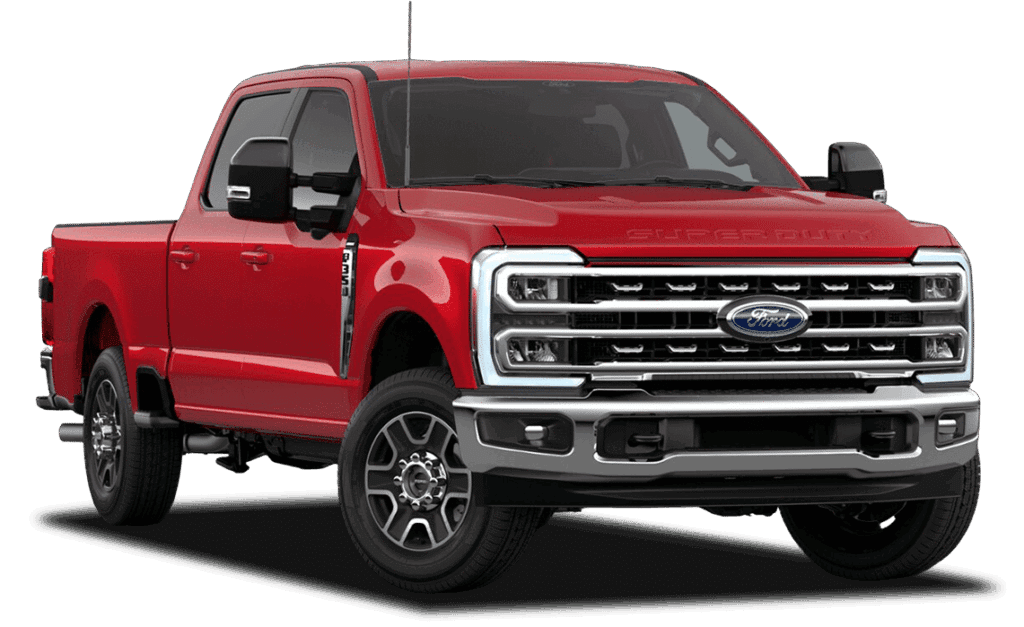
The F-250 vs F-350 decision affects everything from daily driving comfort to maximum towing capability in Ottawa’s demanding commercial environment. Ford’s F-250 and F-350 Super Duty trucks share identical engines, cab styles, and trim levels, but differ significantly in chassis strength and maximum load capacity. For Ottawa and Barrhaven drivers facing winter conditions and diverse hauling needs, choosing correctly prevents costly mistakes.
As of 2025, the F-350 delivers 40% higher maximum towing capacity than the F-250, with dual rear wheel options unavailable on the smaller truck. This guide breaks down real differences between these Super Duty models — covering capability, configurations, and scenarios where each truck excels in eastern Ontario’s challenging conditions.
Core F-250 vs F-350 Super Duty Differences
The F-250 and F-350 look nearly identical from the outside. Same aggressive Super Duty styling, same available trim levels from work-ready XL to luxurious Limited, and same cab configurations. But here’s where they split paths: chassis and running gear.
Classification and Frame Architecture
The F-250 carries three-quarter-ton classification, while the F-350 ranks as a one-ton truck. The F-350 features heavier-duty axles, reinforced suspension components, and stronger frame construction designed for significantly greater loads. These upgrades deliver higher Gross Vehicle Weight Rating (GVWR) and superior towing maximums.
Think of it this way: both trucks use the same body, but the F-350 gets the heavy-duty skeleton underneath. It’s like comparing a well-built house with a really well-built house that has steel beams instead of wood joists.
Single vs Dual Rear Wheel Configuration
Here’s where driving experience changes dramatically. The F-250 comes exclusively with single rear wheels (SRW). The F-350? You get to choose both SRW and dual rear wheel (DRW) configurations.
DRW F-350 models spread weight across four rear tires instead of two, providing markedly better stability when pulling heavy trailers. Ottawa contractors appreciate this stability during long hauls on Highway 417 with loaded equipment trailers.
Those dual wheels aren’t just for show. They’re the difference between white-knuckle towing and confident highway cruising with a heavy load. Ask anyone who’s pulled a 20,000-pound trailer with SRW versus DRW — you’ll see the relief in their eyes when they describe the DRW experience.
F-250 vs F-350 Towing and Payload Capacity
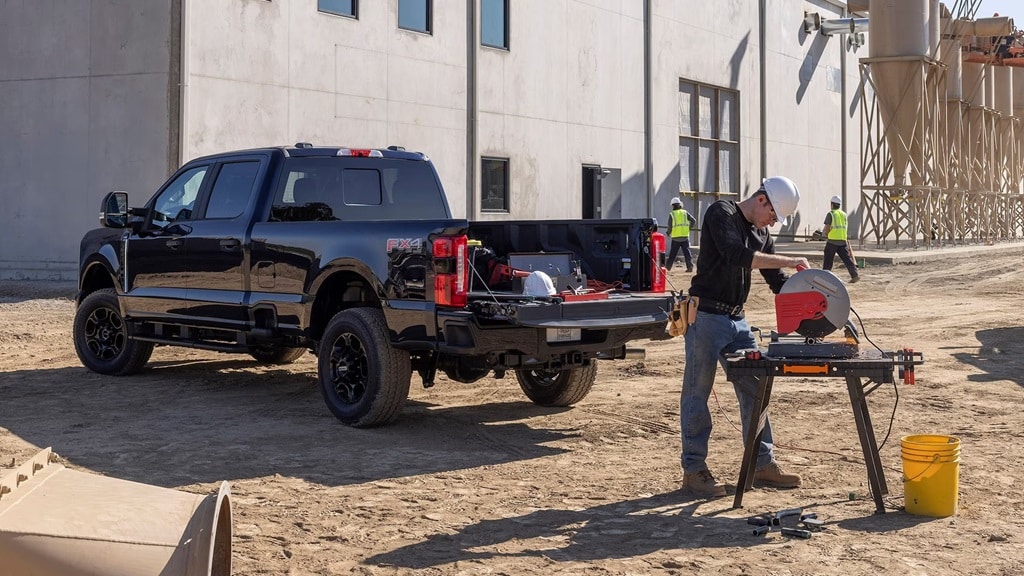
Real capability differences emerge in load ratings. Both trucks handle substantial work, but their ceilings differ meaningfully.
F-250 Capability Range
The F-250 delivers exceptional three-quarter-ton performance. It handles conventional hitching, fifth-wheel setups, and gooseneck configurations confidently. For recreational towing — boats, travel trailers, car haulers — the F-250 provides more capability than most Ottawa drivers need without the added weight of one-ton construction.
Most weekend warriors? They’ll never push the F-250 to its limits. It’s like having a chainsaw to trim hedges — probably more than you need, but you’ll never worry about capability.
F-350 Maximum Performance
The F-350, particularly in DRW form, pushes towing and payload figures substantially higher. When hauling heavy construction equipment, large livestock trailers, or oversized RVs, the F-350’s reinforced running gear provides crucial safety margins.
Ford’s Super Duty towing ratings vary dramatically based on cab style, bed length, engine choice, axle ratio, and hitch configuration. Specific F-350 DRW setups can out-tow comparable F-250 configurations by thousands of pounds.
The numbers don’t lie. But more importantly, that extra capacity means confidence when you’re merging onto the 417 with a loaded trailer behind you.
Ottawa-Area Towing Applications
Consider common Ottawa hauling scenarios:
- Recreational trailers under 10,000 pounds: F-250 handles these easily
- Fifth-wheel RVs: Both work, though heavier units favour F-350 stability
- Construction equipment loads: F-350 DRW provides payload margins professionals require
- Snow plow installations: Both are popular, with F-250 offering better residential manoeuvrability
- Agricultural implements: Weight determines choice — grain trailers lean F-350
For detailed information on heavy duty F-250 capabilities, specific towing charts help match configurations to exact needs.
2026 Super Duty Engine Options
Both F-250 and F-350 share identical engine lineups paired with Ford’s TorqShift 10-speed automatic transmission. Same power, different foundations.
Gasoline Engine Choices
6.2L 2-valve V8: Entry-level powerplant delivering dependable performance. Suits buyers wanting capable work trucks without diesel complexity. It’s straightforward, reliable, and gets the job done.
7.3L V8 “Godzilla”: The gasoline powerhouse option. This naturally aspirated 7.3L engine produces exceptional power while earning strong durability reputation among commercial operators. Popular with buyers wanting serious capability without diesel maintenance requirements.
According to Ford Canada’s official specifications, that “Godzilla” nickname isn’t marketing fluff — this engine earned respect the hard way.
Diesel Powerplant
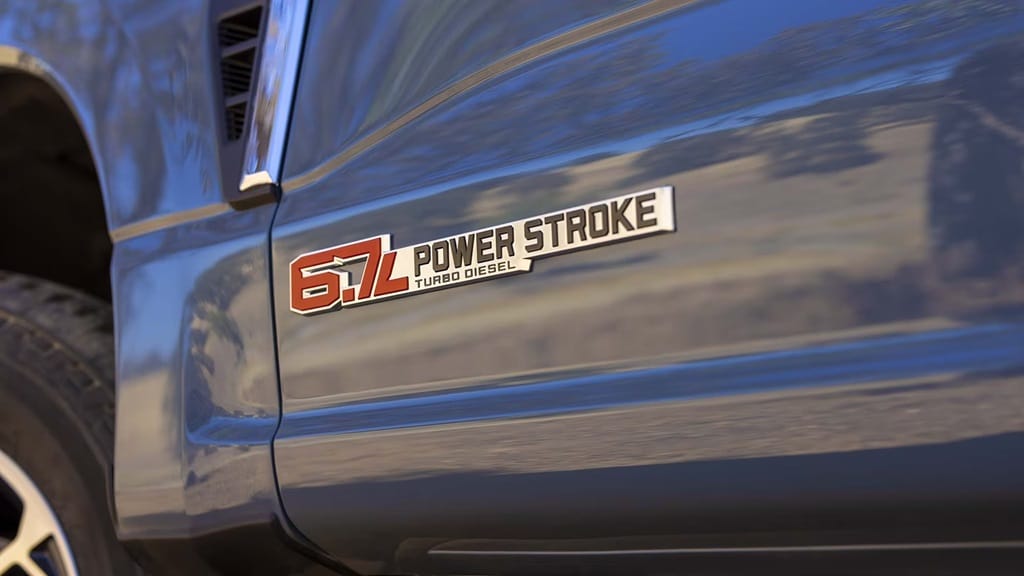
6.7L Power Stroke V8 turbo-diesel: Available in standard and High Output variants, the Power Stroke dominates towing applications. High Output version suits maximum pulling power needs, particularly heavy fifth-wheel and gooseneck applications.
When you feel that diesel torque kick in at 1,800 RPM while pulling uphill, you understand why so many commercial operators choose it.
Fuel Choice for Ontario Conditions
Ottawa-area buyers typically choose based on usage patterns:
Select gasoline for occasional towing, simplified maintenance, and straightforward ownership experience. No DEF fluid. No diesel particulate filter issues. Just gas and go.
Choose diesel for frequent towing, heavy loads, or low-end torque that makes highway merging with loaded trailers effortless.
Heavy-duty trucks like F-250 and F-350 are exempt from standard Canadian fuel economy requirements, so NRCan ratings don’t apply. Real-world fuel consumption varies with load, driving habits, and Ottawa’s harsh winters.
Canadian Configuration Options
Both models offer extensive 2026 configuration choices:
Available Cab Styles
- Regular Cab: Two-door design with maximum bed length for commercial fleets
- SuperCab: Extended cab featuring rear-hinged back doors — practical middle ground
- Crew Cab: Full four-door configuration providing maximum rear passenger space
Bed Length Options
- 6.75-foot short bed: Easier parking and manoeuvring, pairs well with Crew Cab
- 8-foot long bed: Maximum cargo space, preferred for commercial use and fifth-wheel hitching
Drivetrain Availability
Both trucks offer 4×2 (rear-wheel drive) and 4×4 configurations. For Ottawa buyers facing icy Highway 417 conditions and snow-covered job sites, 4×4 is essentially mandatory. Added traction and confidence in Canadian winter conditions makes it overwhelmingly popular locally.
Let’s be honest: if you’re buying a Super Duty in Ottawa and not getting 4×4, you’re doing it wrong.
Current Ford Super Duty inventory shows which configurations are available now.
Decision Framework: Which Super Duty Fits Your Needs?
Rather than comparing specifications endlessly, start with actual usage requirements. What are you actually hauling?
Choose F-250 When You:
- Tow moderately sized trailers — boats, travel trailers, car haulers
- Want heavy-duty capability that remains manageable in Barrhaven city driving
- Need snow plow platform for residential driveways and parking lots
- Use the truck for both commercial work and daily transportation
- Prefer narrower SRW profile for easier parking and lane changes
Choose F-350 When You:
- Regularly tow at maximum capacity limits
- Haul heavy construction materials, equipment, or agricultural loads
- Want DRW configuration for maximum loaded stability
- Require highest possible payload rating for commercial applications
- Plan pulling large fifth-wheel campers or heavy gooseneck trailers
When your towing and payload needs fall within F-250 capability range, it’s the smarter choice. You’ll enjoy easier daily driving without sacrificing meaningful capability. Step up to F-350 when loads genuinely demand it.
Don’t buy more truck than you need. Your wallet and daily driving experience will thank you. Plus, parking a DRW truck at the Rideau Centre? Good luck with that.
Local Super Duty Support in Barrhaven
Purchasing a Super Duty requires knowledgeable local expertise. Barrhaven Ford sales specialists work daily with Ottawa contractors, recreational enthusiasts, and fleet managers. They walk through towing charts, help select proper axle ratios, and ensure configurations match real-world demands.
The Barrhaven Ford service department supports Super Duty owners with factory-trained technicians understanding diesel maintenance, heavy-duty brake systems, and trucks working hard year-round. Additionally, owners of F-150 models can learn about 2026 Ford F-150 Ottawa features and performance to understand Ford’s complete truck lineup.
Frequently Asked Questions
What separates the Ford F-250 from F-350?
The F-250 is a three-quarter-ton truck while the F-350 is a one-ton model with heavier axles, stronger suspension, and higher GVWR. It also offers dual rear wheel options unavailable on F-250. Both share identical engines, transmissions, cab styles, and trim levels. The key difference is load capacity — F-350 can tow and haul substantially more, especially in DRW configuration.
Do both trucks offer the same engines?
Yes. Both models feature identical 2026 engine choices: 6.2L V8 gasoline, 7.3L “Godzilla” V8 gasoline, and 6.7L Power Stroke turbo-diesel in standard and High Output variants. All engines pair with TorqShift 10-speed automatic transmission. Power delivery is identical — differences lie in chassis and running gear capacity.
Which truck better suits fifth-wheel towing?
It depends on trailer weight. Lighter fifth-wheels work well within F-250 capability, and many Ottawa RV owners tow confidently with one. For heavier fifth-wheels exceeding 15,000 pounds, F-350 DRW provides wider safety margins and better loaded stability. Bring trailer specifications to match proper configuration to your load.
How do both trucks perform in Ottawa winters?
Excellently. Equipped with 4×4, both F-250 and F-350 handle Canadian winter conditions exceptionally well. Their weight provides natural traction on snowy, icy roads, and available features like engine block heaters and snow plow prep packages make them Ottawa-winter ready. The F-250’s narrower SRW stance can be easier on tight, snow-lined residential streets.
Should I choose gasoline or diesel for Super Duty?
For frequent towing or heavy loads, the 6.7L Power Stroke diesel offers superior low-end torque and sustained heavy-work capability. For occasional towing with simplified maintenance preference, the 7.3L gasoline V8 provides powerful, reliable alternative. The 6.2L gasoline V8 works well for lighter-duty applications.
Can I get F-350 without dual rear wheels?
Yes. It’s available in both SRW and DRW configurations in Canada. SRW F-350 provides one-ton chassis strength and higher capability ratings while maintaining similar footprint to F-250. It’s popular with buyers wanting extra capacity without full dually setup for typical loads.
How do I determine the right configuration?
Start with your heaviest expected load — both towing and bed cargo. Factor in loading frequency versus empty driving, daily commuting needs, and manoeuvrability importance in your area. Review Ford’s detailed towing and payload charts to find the exact cab, bed, engine, and axle combination matching your requirements.
Which Super Duty works better for commercial use around Ottawa?
Both excel in commercial applications. F-250 suits landscaping, light construction, and service work where manoeuvrability matters. F-350, especially DRW, handles heavy construction equipment, material hauling, and maximum-capacity applications. Choice depends on your specific load requirements and job site conditions around Ottawa and eastern Ontario.
Disclaimer: Content contained in this post is for informational purposes only and may include features and options from US or international models. Please contact the dealership for more information or to confirm vehicle, feature availability.


